Skip to content
Improve blood flow and help the heart work more efficiently with EECP sessions
  • About
  • Theta Chamber
  • EECP
  • Massage
  • Infusion
  • StemWave
  • Morph Device
  • Contact Us
Get into the Theta State At OK Theta & Wellness

Calm your nervous system, reduce stress, and give your mind and body a chance to fully reset.

Learn More

Does your home feel out of control right now? You’re not alone. Let’s start with one small step.

    Support for Everyday Wellness
    • Myofascial release and craniosacral therapy in Oklahoma City with a practitioner gently supporting a client’s head and neck while soft fascial linework illustrates bodywide connective tissue support.
      Myofascial Release and Craniosacral Therapy in Oklahoma City: Helping the Body Feel Safe Enough to Soften
    • Square blog cover image with an ornate floral and nerve-like mandala design surrounding the title “Long COVID and Dysautonomia Support,” with references to POTS, brain fog, blood flow, and nervous system recovery.
      Long COVID and Dysautonomia Support: POTS, Brain Fog, Blood Flow, and Nervous System Recovery

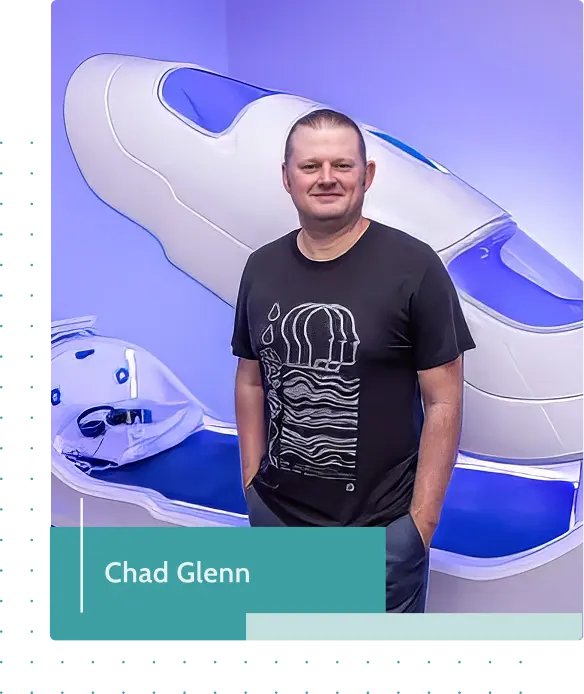
    Hi There, I’m Dr. Chad!

    Former neurosurgeon + Wellness Coach, Husband, Father

    I’m Dr. Chad Glenn, a former neurosurgeon with a lifelong fascination for the brain, healing, and human transformation. Today, my wife and I own and operate OK Theta & Wellness, where we blend neuroscience, wellness technology, and practical mind-body approaches to help people restore balance, clarity, and resilience. Read my story here.

    Cardiovascular Wellness
    • Exercise without exercise: EECP therapy for low-strain cardiovascular support at OK Theta & Wellness.
      Exercise Without Exercise? EECP Therapy And Cardiovascular Benefits
    • Square blog cover image with an ornate floral and nerve-like mandala design surrounding the title “Long COVID and Dysautonomia Support,” with references to POTS, brain fog, blood flow, and nervous system recovery.
      Long COVID and Dysautonomia Support: POTS, Brain Fog, Blood Flow, and Nervous System Recovery
    Recent Blog Posts
    • Exercise without exercise: EECP therapy for low-strain cardiovascular support at OK Theta & Wellness.
      Exercise Without Exercise? EECP Therapy And Cardiovascular Benefits
    • Myofascial release and craniosacral therapy in Oklahoma City with a practitioner gently supporting a client’s head and neck while soft fascial linework illustrates bodywide connective tissue support.
      Myofascial Release and Craniosacral Therapy in Oklahoma City: Helping the Body Feel Safe Enough to Soften
    • Square blog cover image with an ornate floral and nerve-like mandala design surrounding the title “Long COVID and Dysautonomia Support,” with references to POTS, brain fog, blood flow, and nervous system recovery.
      Long COVID and Dysautonomia Support: POTS, Brain Fog, Blood Flow, and Nervous System Recovery
    • Square blog cover image for Active Aging featuring a mature woman walking through flowing burgundy and rose wave patterns, with the text “Active Aging: Circulation, Mobility & Longevity Support” and OK Theta & Wellness branding.
      Active Aging Support: How Circulation, Mobility, and Recovery Work Together
    • Square OK Theta & Wellness blog cover image for “Wired but Tired,” showing a calm seated figure inside a glowing oval surrounded by blue and teal waves, with darker tangled lines on one side and softer restorative waves on the other.
      Wired but Tired: Fatigue, Stress, Poor Sleep, and Nervous System Support
    • Acute Pain vs. Chronic Pain Acute pain usually has a clear protective purpose. You touch something hot, twist an ankle, strain your back, or irritate a joint, and the body sends a warning signal. Acute pain says, “Pay attention. Something happened.” That kind of pain is not pleasant, but it is useful. Chronic pain is different. Chronic pain can begin with an injury or a tissue problem, but over time the pain experience may continue even after the original injury has changed, stabilized, or become only part of the story. This is where many people become confused or discouraged. They may be told that their imaging does not look “bad enough” to explain their pain. Or they may be told that everything looks normal, even though their body clearly does not feel normal. Other people may have obvious arthritis, disc problems, neuropathy, tendon degeneration, scar tissue, or old injuries, but the severity of their pain still seems to fluctuate in ways that are hard to explain by structure alone. This is one of the most important things to understand about chronic pain: Pain is not a simple measurement of tissue damage. Pain is an experience created by the nervous system in response to many inputs. Those inputs can include tissue irritation, inflammation, nerve signaling, stress, poor sleep, fear, movement patterns, immune activity, and the brain’s prediction of threat. That does not make chronic pain less real. It makes it more complex. Why the Nervous System Can Become More Sensitive The nervous system is designed to learn. That is usually a gift. We learn balance, coordination, language, rhythm, movement, danger, safety, and skill. But the nervous system can also learn pain. When pain persists, the system can become more protective. The “volume knob” can get turned up. A movement that used to feel normal may begin to feel threatening. A light touch may become uncomfortable. A small flare may feel like a major setback. Stress or poor sleep may make symptoms dramatically worse. I sometimes think of this like a smoke alarm that has become too sensitive. Sometimes there is a real fire. Sometimes there is smoke. Sometimes the alarm has become so reactive that it starts responding to toast like the house is burning down. Chronic pain can involve all three. There may still be a real tissue problem. There may still be inflammation, degeneration, nerve irritation, or poor circulation. But there may also be an overprotective nervous system amplifying the experience. That amplification can show up in many ways: Pain that spreads beyond the original area Pain that flares with stress Pain that worsens after poor sleep Pain that feels unpredictable Increased sensitivity to touch, pressure, cold, or movement Muscle guarding Fear of using the affected area Fatigue from constantly managing symptoms A sense that the body is stuck in high alert This is why I do not like reducing chronic pain to either “structural” or “emotional.” The body does not divide itself that neatly. Pain can be structural, neurological, inflammatory, metabolic, emotional, and protective all at once. The body is not a spreadsheet. It is a living system. The Chronic Pain Loop One of the patterns I often think about is the chronic pain loop. Pain leads to guarding. Guarding changes movement. Altered movement creates new strain. Pain disrupts sleep. Poor sleep lowers pain tolerance. Stress increases nervous system sensitivity. The person becomes more cautious, less confident, and less active. Reduced movement can affect circulation, strength, and tissue tolerance. Then the pain becomes easier to trigger. The loop can look something like this: Pain → guarding → less movement → poorer sleep → stress → nervous system sensitivity → more pain Once this pattern becomes established, the original painful area may still matter, but it may no longer be the only thing keeping the pain going. This is one reason chronic pain can feel so exhausting. The person is not just dealing with pain in one location. They are dealing with the way pain has changed their whole system. They may sleep differently. They may breathe differently. They may move differently. They may avoid activities they used to enjoy. They may become emotionally worn down. They may lose confidence in their own body. That loss of confidence is not a small thing. When someone begins to feel like their body cannot be trusted, the nervous system often becomes even more vigilant. It scans, predicts, braces, and protects. The body becomes a guard dog that never gets off duty. Why One Therapy May Not Address Every Layer This is why I do not always think of chronic pain support as one therapy for one problem. Sometimes the tissue needs direct support. Sometimes the nervous system needs calming. Sometimes circulation needs attention. Sometimes the muscles and fascia need help letting go. Sometimes the person needs to rebuild confidence with movement. Sometimes sleep and stress are the biggest levers. Sometimes nutrient status, hydration, or metabolic health are part of the picture. At OK Theta & Wellness, we offer several therapies that may support different layers of the chronic pain pattern. These include the Theta Chamber, Morph/PENS, StemWave, EECP, massage and assisted stretching, PEMF, and infusion support. The goal is not to throw everything at the wall. The goal is to ask a better question: Which layer of the pain pattern seems to be asking for support first? For one person, that may be irritated tissue. For another, it may be nervous system sensitivity. For someone else, it may be circulation, poor sleep, neuropathy symptoms, or muscle guarding. A thoughtful plan begins by listening to the pattern. The Theta Chamber: Supporting the Nervous System Side of Pain The Theta Chamber is one of the main tools we use at OK Theta & Wellness for nervous system regulation. I do not think of the Theta Chamber as a simple “pain treatment” in the narrow sense. I think of it more as an environment that may help the nervous system shift out of a high-alert, guarded, pain-amplifying state. Chronic pain can keep the body in protection mode. That may look like shallow breathing, tight shoulders, clenched jaws, guarded movement, poor sleep, irritability, and a sense that the body is always waiting for the next flare. In the Theta Chamber, the body is exposed to several rhythmic inputs at once: gentle rotation, light stimulation through goggles, binaural beats or audio stimulation, PEMF, and, depending on the unit, cranial electrotherapy-style support. The experience is designed to help encourage a shift toward slower brainwave states and deeper relaxation. For some people, the important change is not that pain instantly disappears. It is that the body becomes less guarded around the pain. They may breathe differently. They may feel less braced. They may sleep better. They may notice pain without feeling as consumed by it. They may feel more spacious inside their own body. That shift matters. When chronic pain has been present for a long time, the nervous system may need repeated experiences of safety. Not just intellectual safety. Body-level safety. The kind of safety where the body begins to believe it does not have to clench, protect, scan, and prepare every second of the day. That is where I think the Theta Chamber can be especially meaningful. Morph/PENS: Supporting Pain Signaling and Autonomic Balance Morph is another therapy that fits naturally into the conversation about chronic pain and the nervous system. Morph is an ear-based peripheral nerve stimulation device. It is worn for several days and stimulates specific points on the ear. The ear is interesting because it has connections to several nerve pathways involved in pain signaling, autonomic regulation, and body-state awareness. I think of Morph as a way to gently nudge the body’s signaling system over time. If the Theta Chamber is a deeper immersive nervous system environment, Morph is more like a wearable signal that continues working in the background. It may be especially worth considering when pain seems tied to stress, poor sleep, neuropathy-type symptoms, high-alert physiology, or difficulty settling after a flare. For some people, pain is not just pain. It comes with agitation, poor sleep, restlessness, anxiety-like body sensations, or a sense that the system cannot downshift. In those situations, supporting the nervous system may be just as important as supporting the painful area itself. StemWave: Supporting Irritated Tissue and Local Recovery I also do not want to reduce chronic pain to only the nervous system, because tissue still matters. A sore tendon still matters. An arthritic joint still matters. An irritated foot, shoulder, hip, knee, back, or neck still matters. Old injuries, scars, fascia, and areas of chronic degeneration can keep feeding the pain loop. StemWave is one of the ways we support the local tissue environment. StemWave uses focused acoustic wave technology to stimulate tissue response, local circulation, and recovery signaling in targeted areas. This can be helpful when the pain has a clear local component: a tendon that keeps flaring, a joint that stays irritated, a foot that hurts with walking, a shoulder that does not tolerate use, or a chronic area that seems stuck in a cycle of inflammation and sensitivity. StemWave and nervous system support can also complement each other. If a painful area is constantly feeding the nervous system with irritation, calming the nervous system alone may not be enough. But if the nervous system is highly sensitized, working only on the tissue may also fall short. In chronic pain, local and global support often belong in the same conversation. Massage and Assisted Stretching: Helping the Body Stop Bracing Chronic pain teaches the body to brace. That bracing may begin as protection, but over time it can become part of the problem. Muscles tighten. Fascia becomes less mobile. Movement becomes smaller. Other areas compensate. The person may begin moving around pain instead of through life. Massage and assisted stretching can help create a different conversation with the body. Not force. Not punishment. Not “no pain, no gain.” Instead, guided touch and movement can help the body explore where it has been overprotecting. Massage may help soften specific areas of tension. Assisted stretching may help the body experience range of motion in a supported way. This can be especially useful for people who have become guarded, stiff, tense, or fearful of movement. There is also an awareness component. Many people with chronic pain lose the ability to clearly interpret body signals. Everything becomes threat. Everything becomes “bad pain.” Gentle bodywork can sometimes help a person begin to distinguish between stretch, pressure, tenderness, release, tension, discomfort, and danger. That distinction matters because confidence is part of recovery. The body often needs to relearn that movement can be safe. EECP: Circulation, Recovery, and the Whole-Body Pain Environment EECP, or Enhanced External Counterpulsation, is usually discussed in relation to circulation and cardiovascular support, but I also think it can belong in a broader conversation about chronic pain, especially when pain overlaps with fatigue, poor circulation, neuropathy concerns, metabolic issues, or low recovery capacity. EECP uses inflatable cuffs on the legs that rhythmically compress in timing with the heartbeat. The goal is to support blood flow, vascular function, and circulation. I do not think of EECP as a “joint treatment” or a “back treatment” in the simple sense. I think of it more as a circulation and recovery-support therapy. That distinction is important. The body needs circulation to deliver oxygen, nutrients, immune cells, and repair signals. It also needs circulation to clear metabolic waste and support tissue health. When someone is dealing with chronic pain, poor conditioning, vascular risk factors, cold extremities, neuropathy symptoms, or fatigue, circulation may be part of the larger pain environment. For some people, improving the body’s delivery system may help support the overall recovery picture. Infusion Support: Nutrients, Hydration, and Recovery Capacity Infusion support is another layer that may be considered when chronic pain overlaps with fatigue, poor recovery, nutrient depletion, dehydration, muscle tension, metabolic stress, or neuropathy-type symptoms. This does not mean an infusion “treats chronic pain” in a broad, one-size-fits-all way. That would be too simplistic. But the internal terrain matters. Some people with chronic pain also have low energy, poor sleep, poor intake, medication-related nutrient issues, digestive limitations, or increased physiologic stress. In those situations, supporting hydration, B vitamins, magnesium, amino acids, antioxidants, or NAD+ may be part of a larger wellness strategy. For example, B12 status can matter in nerve health. Magnesium may be relevant for muscle tension and relaxation. NAD+ is often discussed in relation to cellular energy and mitochondrial function. Glutathione and vitamin C are often discussed in the context of antioxidant support. The key is individualization. Infusion support is not a replacement for evaluating the source of pain. It is better understood as one possible way to support the body’s recovery capacity when the broader picture suggests it may be useful. Matching the Support to the Pattern One of the most helpful questions is not, “Which therapy is best?” A better question is: What does this pain pattern seem to involve? If the pain is mostly local and tissue-based, StemWave or massage may be a good place to start. If the pain worsens with stress, poor sleep, or nervous system overload, the Theta Chamber or Morph may make more sense. If there are neuropathy-type symptoms such as burning, tingling, numbness, cold feet, or electric pain, then Morph, StemWave, EECP, PEMF, and nutrient support may all be worth discussing. If the person feels stiff, guarded, and afraid to move, massage and assisted stretching may be especially important. If the person has pain plus fatigue, brain fog, poor circulation, or low stamina, EECP, the Theta Chamber, PEMF, or infusion support may be part of the conversation. Here is a simple way to think about it: If chronic pain feels like... Support options we may discuss Local tendon, joint, or soft tissue irritation StemWave, massage, PEMF Pain that worsens with stress or poor sleep Theta Chamber, Morph, massage Neuropathy-like burning, tingling, or numbness Morph, StemWave, EECP, B12 support Heavy muscle guarding or compensation Massage, assisted stretching, Theta Chamber Pain plus fatigue or brain fog Theta Chamber, EECP, infusion support Pain plus poor circulation or cold extremities EECP, StemWave, PEMF Pain after injury or surgery StemWave, Morph, massage, infusion support Pain that has reduced confidence with movement Massage, assisted stretching, nervous system support The point is not to make the plan complicated. The point is to make it more accurate. Chronic pain deserves more than a one-layer answer when the pattern itself has become multi-layered. What to Track Over Time When someone is dealing with chronic pain, I do not only want to know whether the pain score changed from a 7 to a 4. That matters, of course. But pain is more than a number. I also want to know how the person is living. Here are some of the things worth tracking: Is the pain less sharp? Are flares shorter? Are bad days less intense? Are good days lasting longer? Is sleep improving? Are you less guarded? Are you moving more naturally? Is walking, reaching, bending, or standing easier? Are you using the affected area with more confidence? Are you recovering faster after activity? Is the pain less emotionally consuming? Are you returning to baseline faster after a flare? Are you needing fewer rescue strategies? Are you more willing to move? Sometimes progress shows up as less pain. Sometimes it shows up as more capacity. A person may still have discomfort, but they are sleeping better, moving better, recovering faster, and feeling less afraid of their body. That is not a small thing. That is the nervous system beginning to loosen its grip. Who Might Consider a Multi-Modal Chronic Pain Support Approach? A multi-modal approach may be worth considering for people dealing with: Chronic joint, tendon, muscle, or nerve-related discomfort Chronic back, neck, shoulder, hip, knee, or foot pain Neuropathy-type symptoms such as burning, tingling, numbness, or electric pain Pain that worsens with stress or poor sleep Pain that causes muscle guarding or compensation Pain that has reduced confidence with movement Pain after an old injury or surgery Pain that overlaps with fatigue, brain fog, or poor recovery A body that feels stuck in fight-or-flight A desire for non-opioid supportive options This approach is not meant to replace medical evaluation, imaging when needed, physical therapy, surgery when appropriate, or medication management. There are times when those things are absolutely necessary. Instead, I see this as a supportive approach for people whose chronic pain has become more than a simple short-term injury. The Bigger Goal: Helping the Body Feel Safer Chronic pain can become exhausting because it does not always live in one place. It may involve the tissue, the nerves, the muscles, the blood flow, the sleep cycle, the stress response, and the body’s protective memory. It can affect how a person moves, rests, thinks, plans, and trusts their own body. At OK Theta & Wellness, my goal is to help people think about chronic pain differently. Not as a personal failure. Not as something imaginary. Not as something that always has one simple cause. Not as something that must be chased only with stronger and stronger interventions. Instead, I think of chronic pain as a pattern that may need to be supported from more than one direction. The tissue may need help. The nervous system may need safety. The muscles may need to stop guarding. The circulation may need support. The body may need better sleep. The person may need to rebuild confidence. When those layers are addressed together, the body may have a better chance of changing the pattern. If you are dealing with chronic pain, neuropathy symptoms, muscle guarding, poor sleep, or pain that seems to flare with stress, we would be glad to help you explore a thoughtful, non-opioid support plan at OK Theta & Wellness.
      Chronic Pain and the Nervous System: A Multi-Modal Support Approach at OK Theta & Wellness

    Heading Here

    GET THE E-BOOK
    • Benefit 1 (not on the blog)
    • Perfect for beginners
    • Benefit 2
    • Benefit 3
    + more
    REPLACE WITH CONVERT KIT BUTTON

    Spin into Wellness in Oklahoma’s First Theta Chamber!

    Book a Session
    Featured On:

    Facebook Instagram TikTok

    © 2026  Ok Theta & Wellness

    • About
    • Theta Chamber
    • EECP
    • Massage
    • Infusion
    • StemWave
    • Morph Device
    • Contact Us